A good domain name is easy to remember, pronounce, and spell. It should also fit your project, appeal to your audience, and be available at a price you can afford. Finding a name that meets all these criteria takes more than a quick search.
This guide walks you through a practical process for finding a domain name for a business, a new product, or a technology project.
Start with the brand, not the extension
Before you check availability, define what you want the name to communicate. Write down words related to your business, your product, your audience, and the impression you want to create. Combine these words, explore synonyms, and try different structures.
You can also invent a new word by combining meaningful parts or adapting an existing word. The goal is a name that feels distinctive without becoming hard to understand or pronounce.
Keep several candidates rather than committing to your first idea. A shortlist gives you more options when your preferred name is already registered.
Follow the rules that make names work
When you evaluate your candidates, consider these guidelines:
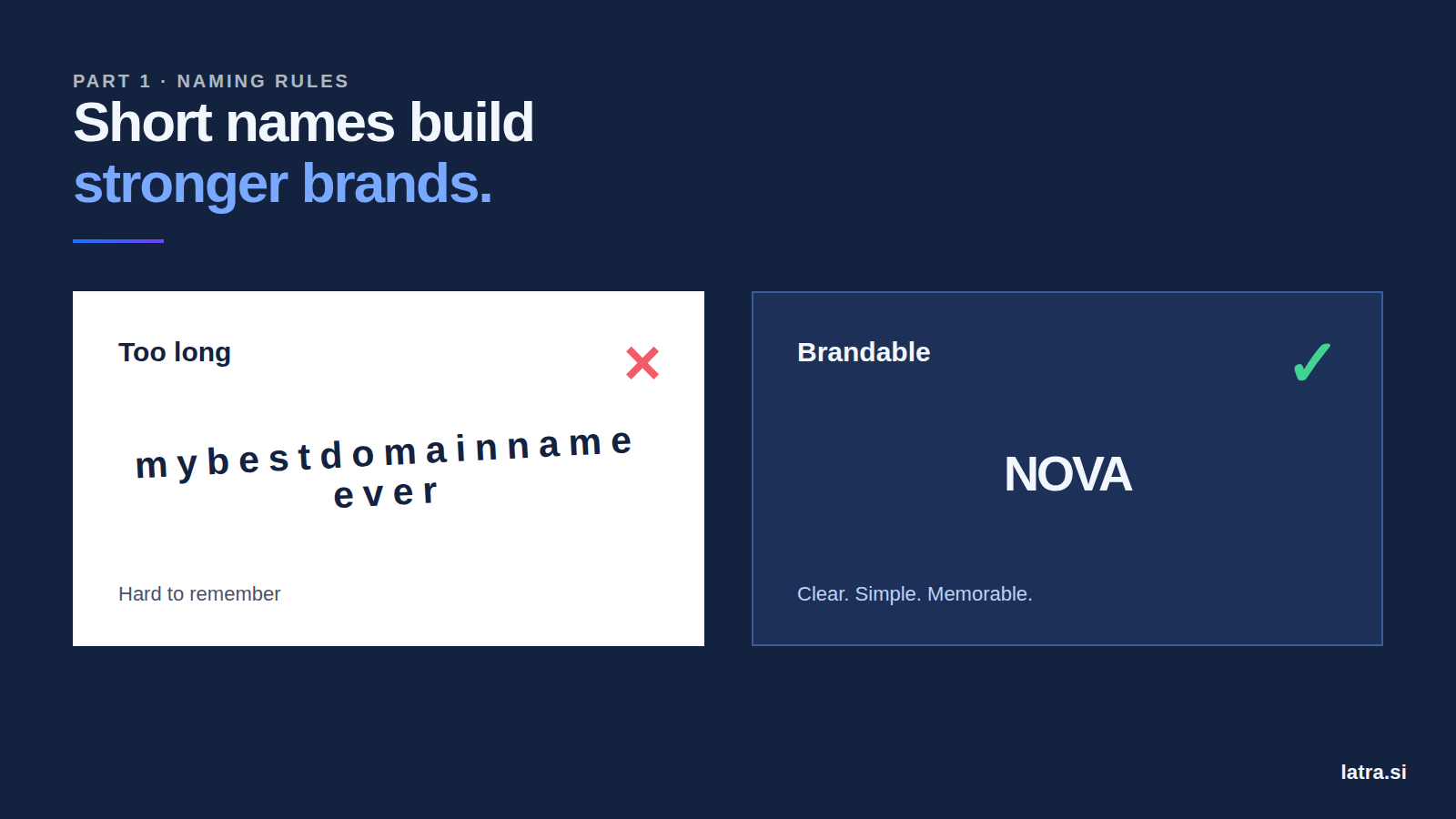
- Keep it short. Short names are easier to remember and type, although a longer name can work if it is clear and distinctive.
- Say it out loud. If people struggle to understand the name when they hear it, they may have trouble finding your website.
- Avoid unnecessary hyphens and numbers. They make a domain harder to communicate verbally and easier to mistype.
- Choose a spelling people can recognize. Unusual spellings can help a brand stand out, but they can also send visitors to the wrong address.
- Check how it reads. Read the domain without spaces to make sure it does not form an unintended word.
- Think beyond your first product. Choose a name that can accommodate future products or services.
Check domain availability in bulk
Once you have a shortlist, check several candidates at the same time instead of searching one by one. Our Bulk Domain Checker lets you paste a list of full domain names, including different extensions, and see which ones appear registered or available.
For example, you might compare:
- yourbrand.com
- yourbrand.ai
- yourbrand.co
- yourbrand.si
Checking several extensions can reveal alternatives when your preferred .com is taken.
An availability result is an initial indication, not a guarantee that you can register the domain at the expected price. Some names may be reserved, subject to special pricing, or affected by registry restrictions. Confirm the current status and total cost with a registrar before you proceed.
Choose the extension on purpose
The extension can influence how people perceive your brand, but the right choice depends on your audience, industry, and budget.
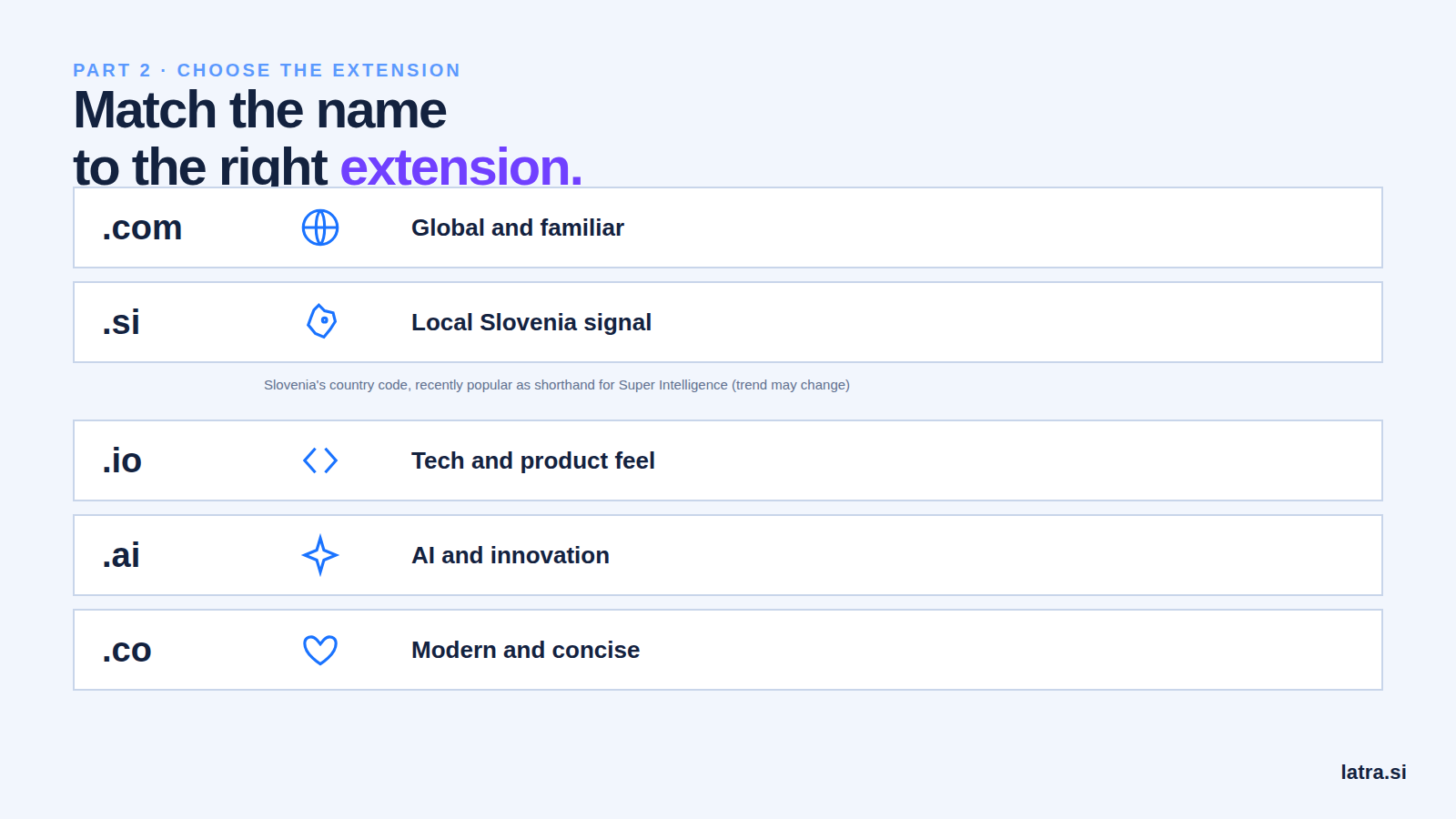
- .com: Widely recognized by businesses and consumers. A practical choice for companies serving international markets.
- .si: Slovenia’s country-code extension, relevant to Slovenian businesses and audiences. It is also drawing attention in technology branding, because SI can stand for Super Intelligence.
- .ai: Commonly used by artificial intelligence companies and related projects.
- .io: Frequently used by technology startups and software projects.
- .co: A shorter alternative used by businesses and startups.
No extension is automatically right for every project. Compare registration and renewal costs, consider how the name will look to your audience, and check whether the extension fits your use.
Check the name against trademarks
A domain can be available for registration even when the name conflicts with an existing trademark.
Before you commit, search official trademark databases in the countries where you plan to operate. Look for identical names, similar spellings, and trademarks covering related products or services. Consider whether the name could confuse customers or suggest an association with an existing business.
Domain availability does not establish trademark availability or give you the right to use a name commercially. If your preferred name is close to an established brand, seek qualified legal advice before you launch.
Estimate the cost and value before you commit
Before you register a domain, look beyond the first-year price. Compare the renewal fee, any premium registration price, and the cost of holding the domain over time.
Our Domain Value Estimator gives an indicative estimate based on length, extension, and name structure.
Treat this estimate as a reference, not a guaranteed market price. A name’s commercial value depends on factors a simple tool may not capture, including its relevance to a particular business, existing brand associations, buyer demand, and comparable sales. If you are choosing a name for your own project, focus first on its usefulness to your business and audience. An estimated resale value should not replace that decision.
A simple process you can repeat
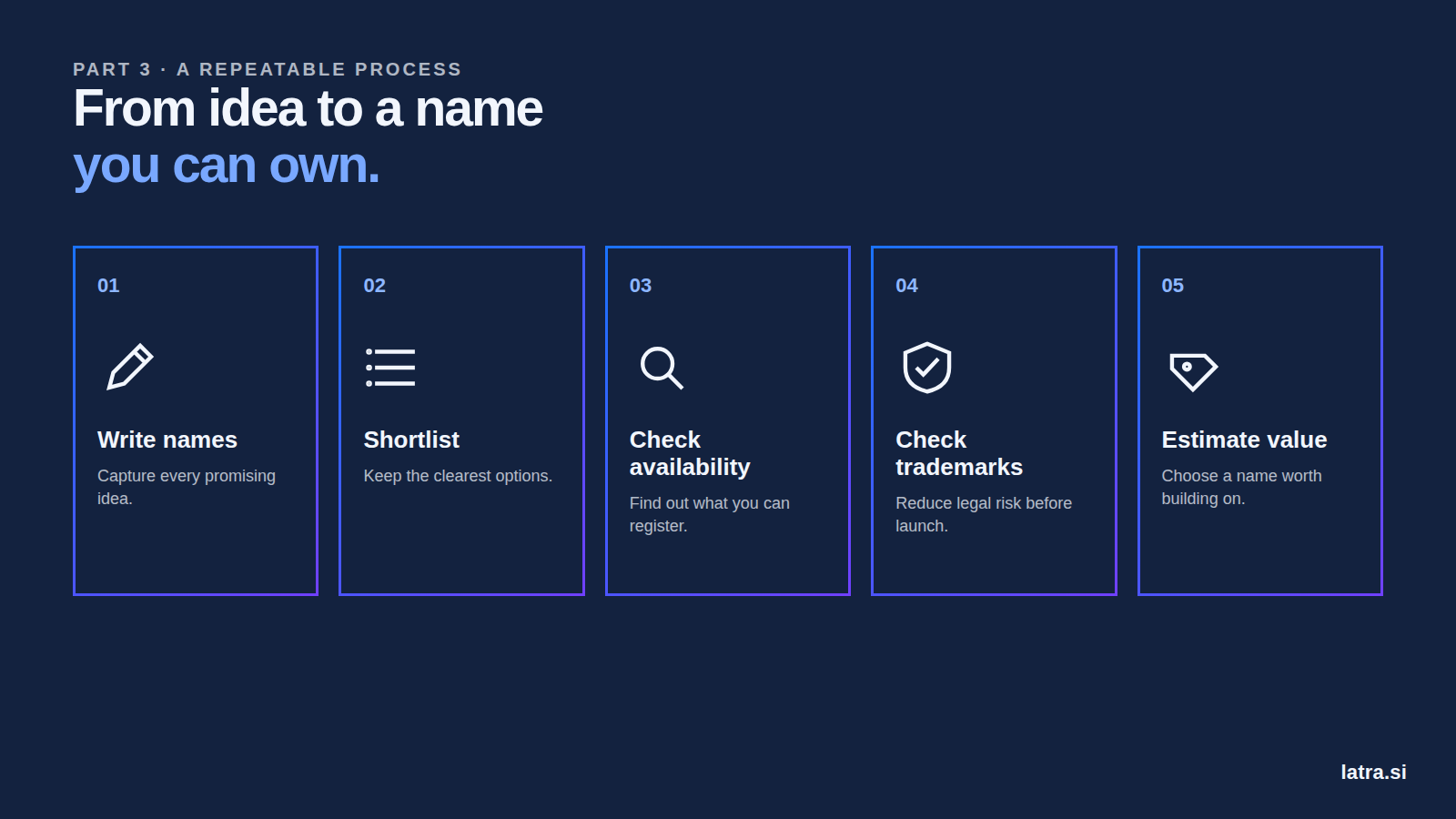
Use these five steps to move from an idea to a shortlist:
- Generate 30 candidates. Start with words related to your business, product, audience, or brand.
- Filter the list. Remove names that are hard to pronounce, spell, read, or remember.
- Check availability in bulk. Compare your strongest candidates across relevant extensions and confirm registration costs.
- Screen for trademark conflicts. Search official databases in your target markets before you commit.
- Compare your final choices. Consider brand fit, audience, long-term usability, and total cost before you select a name.
You do not need to find a perfect name right away. A structured process helps you explore more options, avoid common mistakes, and make a better-informed choice.
The best domain name is not simply one that is available. It is one you can use confidently to build a recognizable and credible brand.