Every day, domain names expire because their owners did not renew them. Some are picked up again quickly, and others are released to the public through auctions run by domain platforms. If you are looking for a name you cannot find on the open market, expired domain auctions are one place to look.
This guide explains how expired domains reach auction, what kinds of auctions exist, and how the major platforms differ. It does not promise profits. Auctions can produce good names at fair prices, but they can also produce costly mistakes.
What happens when a domain expires
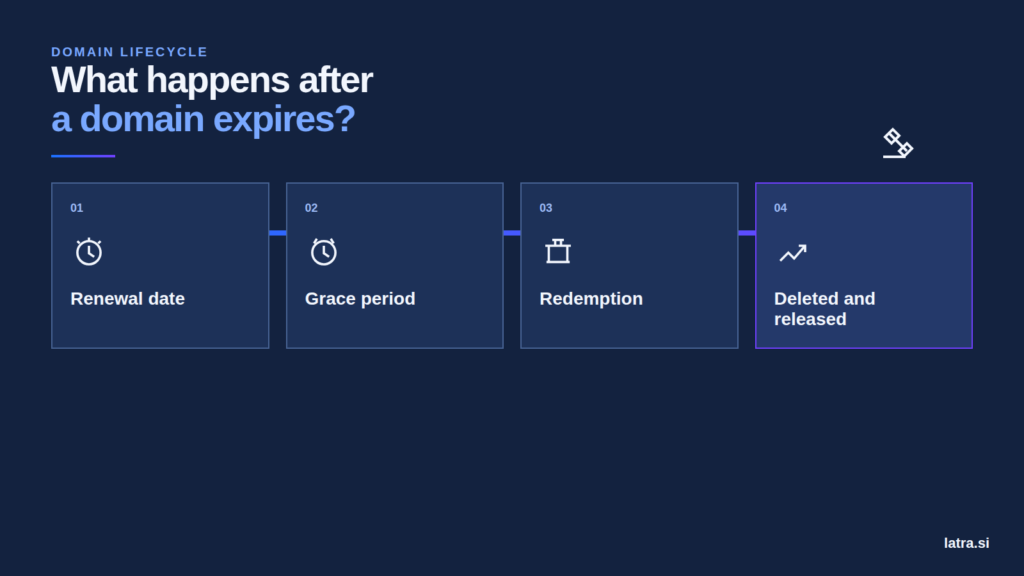
A domain does not go to auction the moment its renewal date passes. What happens next depends on the registrar and the extension. Many registrars allow a renewal grace period, and some domains then move through a redemption stage before they are deleted. The exact timing and rules are set by each registrar’s terms, so an expired name does not always follow the same path.
Once a domain is deleted, it becomes available to register again. Some expired domains are caught by drop-catching services at that moment, while others are offered to the public through auction. Check the specific platform’s terms for any name you want.
The main types of auctions
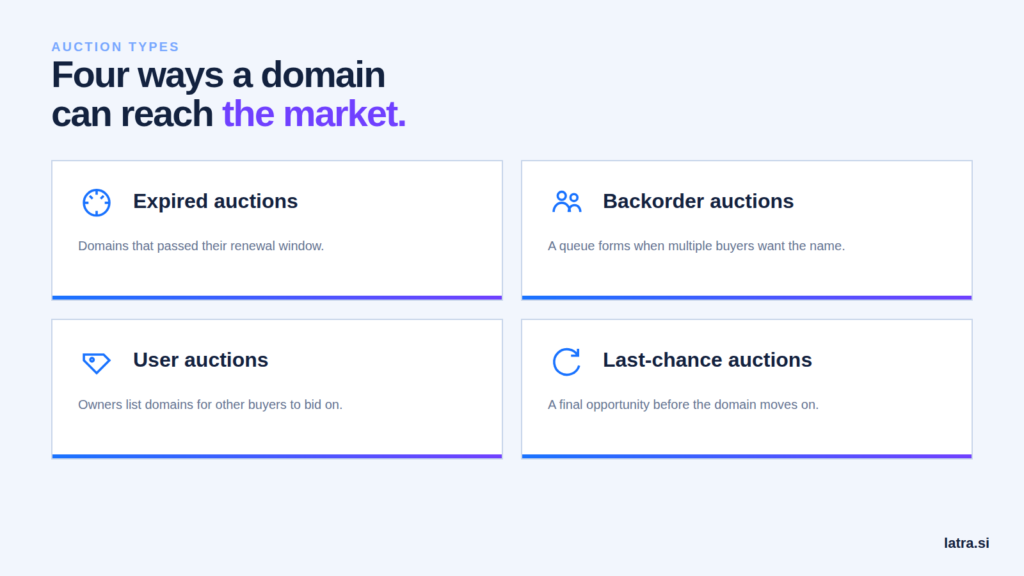
- Expired auctions: Domains that were not renewed by their owners and are offered at auction by a platform.
- Backorder auctions: When several buyers place a backorder on the same domain, the platform may run an auction among them if the domain drops.
- User auctions: Domains listed for sale by their current owners, with a set start time and reserve price.
- Last-chance auctions: Names that did not sell in earlier rounds and are offered again.
Each platform uses its own names and rules for these types, so read the auction terms before you bid.
How the main platforms differ
No single platform covers every type of auction, and inventory changes constantly. The table below shows what each platform is generally known for. It is a map of differences, not a ranking, and you should confirm current terms on each platform before you bid.
| Platform | What it is generally known for | What to check before bidding |
|---|---|---|
| GoDaddy Auctions | Expired domains and user-listed domains | Membership requirements and current fees |
| NameJet | Expired and deleted domains, including premium names from some legacy registrars | Auction format, bidder verification, and listing history |
| SnapNames | Shares inventory with NameJet, as both are part of the same company | Whether a name is listed on one platform, both, or neither |
| DropCatch | Drop-catching and backorder service | Backorder fees and what happens if several customers backorder the same name |
| Dynadot | Expired, backorder, user, and last-chance auctions | Which auction type the name is in and its closing rules |
| Sedo | Timed auctions alongside fixed-price listings, and seller-started auctions | Seller terms and reserve prices |
| Atom | Auctions within a catalog of premium domains | Auction type, reserve rules, and buyer requirements |
Backorders versus auctions
A backorder is a request to catch a domain when it becomes available. An auction is a competition among bidders for a domain that is already on sale. Backorders usually cost less to place, but you may not win if other people also placed backorders on the same name. Auctions show you the price in real time, but the bidding can push the final price well above your first estimate.
Some buyers use both. They place backorders on names they want, and watch auctions for names they missed.
How the main platforms differ
No single platform covers every type of auction, and inventory changes constantly. The table below shows what each platform is generally known for. It is a map of differences, not a ranking, and you should confirm current terms on each platform before you bid.
| Platform | What it is generally known for | What to check before bidding |
|---|---|---|
| GoDaddy Auctions | Expired domains and user-listed domains | Membership requirements and current fees |
| NameJet | Expired and deleted domains, including premium names from some legacy registrars | Auction format, bidder verification, and listing history |
| SnapNames | Shares inventory with NameJet, as both are part of the same company | Whether a name is listed on one platform, both, or neither |
| DropCatch | Drop-catching and backorder service | Backorder fees and what happens if several customers backorder the same name |
| Dynadot | Expired, backorder, user, and last-chance auctions | Which auction type the name is in and its closing rules |
| Sedo | Timed auctions alongside fixed-price listings, and seller-started auctions | Seller terms and reserve prices |
| Atom | Auctions within a catalog of premium domains | Auction type, reserve rules, and buyer requirements |
Backorders versus auctions
A backorder is a request to catch a domain when it becomes available. An auction is a competition among bidders for a domain that is already on sale. Backorders usually cost less to place, but you may not win if other people also placed backorders on the same name. Auctions show you the price in real time, but the bidding can push the final price well above your first estimate.
Some buyers use both. They place backorders on names they want, and watch auctions for names they missed.